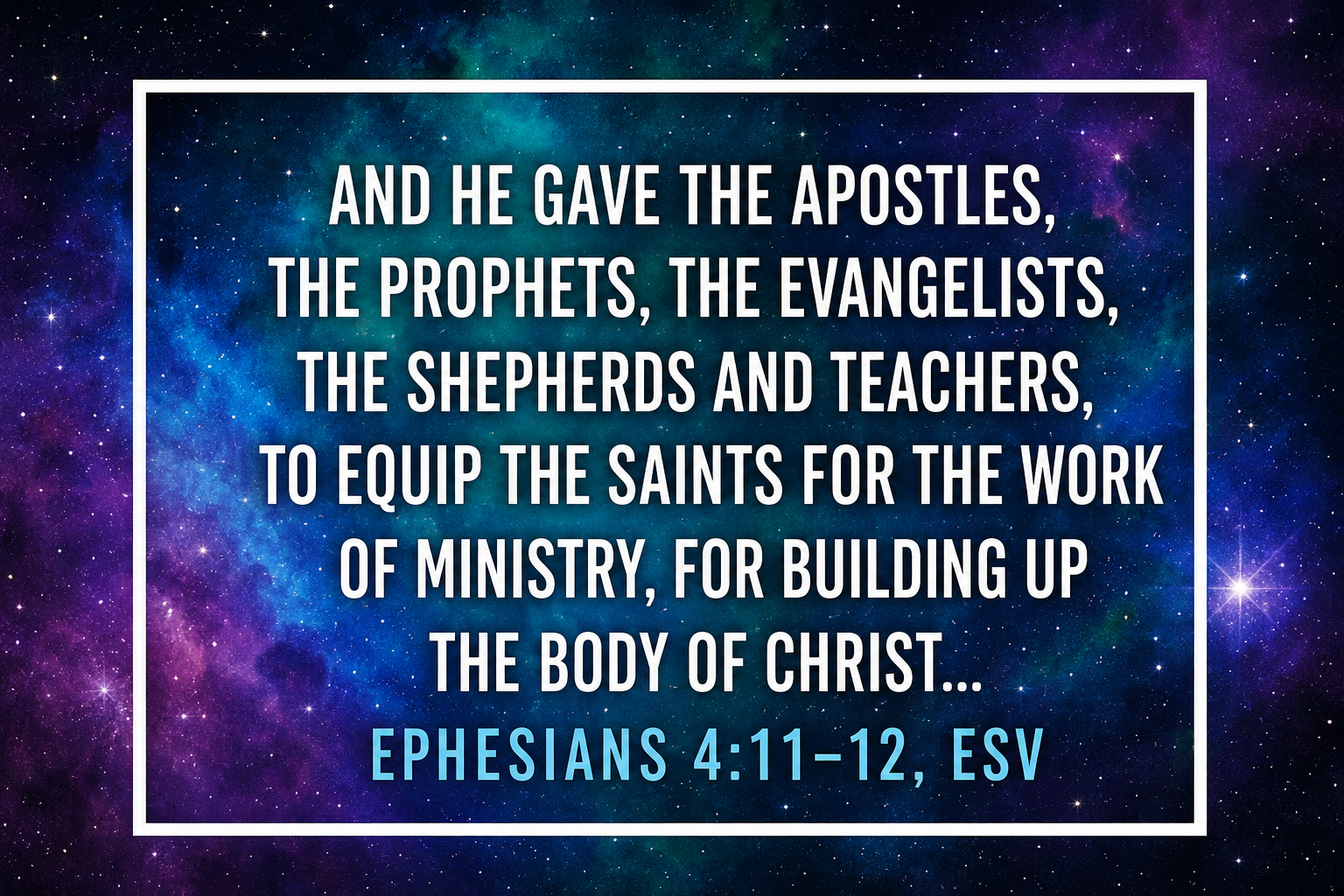
"Surely the Lord God does nothing, unless He reveals His secret to His servants the prophets."
Amos 3:7 (NKJV)What Is a Prophet?
A prophet is one who speaks for God — not primarily foretelling the future, but forth-telling: declaring what God is saying, what God is doing, and what God requires. The prophet operates with a heightened spiritual perception. They see into the spiritual realm, hear the voice of the Spirit, and carry a boldness to declare what others may not yet perceive.
Prophets are the spiritual "eyes" of the body. Where the apostle builds, the prophet sees. Their gift is revelation — they receive insight from the Holy Spirit about individuals, churches, cities, and nations, and they speak that revelation for the purpose of edification, exhortation, and comfort (1 Corinthians 14:3).
The Prophetic Function
- Revelation: Receiving insight, knowledge, or vision from the Holy Spirit about people or situations.
- Declaration: Speaking forth God's word with boldness and authority.
- Intercession: Many prophets carry a deep burden for prayer — they see what is happening in the spiritual realm and pray accordingly.
- Course Correction: Prophets call the church back to God's purposes when she has drifted. They are not popular, but they are necessary.
"But he who prophesies speaks edification and exhortation and comfort to men."
1 Corinthians 14:3 (NKJV)The Prophet in the New Testament
The New Testament office of prophet is distinct from the Old Testament model. New Testament prophets speak under the New Covenant — confirmed by the completed work of Christ and the indwelling Holy Spirit. They do not add to Scripture; they apply and illuminate Scripture. All prophecy must be tested against the written Word of God.
Examples of New Testament prophets include Agabus (Acts 11:28, 21:10), the prophets of Antioch (Acts 13:1), Philip's four daughters (Acts 21:9), and others mentioned throughout the epistles. Paul commanded the church, "Do not despise prophecies. Test all things; hold fast what is good" (1 Thessalonians 5:20-21).